
Designing with Empathy: Young Architects Build for Communities at the Margins

SHARE THIS:

Designing with Empathy: Young Architects Build for Communities at the Margins

After months of sessions, collaboration, and design work, the Angat Sining Arkitektura Internship Program came to a close with the presentation and exhibit of the interns’ capstone projects at the University of Nueva Caceres.

The program was a chance to explore how architecture, when guided by empathy, can respond to those often left at the edges—designs for spaces at the margins, for last-mile communities too easily overlooked in planning and policy. Each capstone project carried this conviction: that architecture has the power to restore dignity, to make daily life more humane, and to bring people closer to the opportunities they deserve.

The interns produced a Design Manual that compiles these capstone projects, each anchored on Angat Buhay’s five pillars: Education, Health, Community Engagement, Climate Action, and Arts & Culture. Their outputs include classrooms and dormitories, health centers, evacuation sites, socialized housing, and recreational spaces.

These capstones embody the belief that architecture goes beyond structures; it is a tool for nation-building. And when architects design with empathy, collaboration, and social responsibility, they help shape a Philippines that is more inclusive, resilient, and just.

This will be their compass as they step into the profession—that every drawing is more than a technical output, but a choice to serve; every design is a chance to include those who are usually excluded.

Gratitude to Partners and Mentors

This internship was made possible through the support of our partners: C.C. Buencamino Architect, the National University College of Architecture, the University of Santo Tomas College of Architecture Alumni Association, Inc., and the United Architects of the Philippines National Headquarters.

Our heartfelt thanks as well to Ar. Peach Buencamino, Ar. Norma I. Alarcon, Ar. Chona E. Ponce, and Ar. Beth Regala, whose wisdom and guidance have been the steady pillars of this program.

Catch a glimpse of the event:
🔗Capstone Presentation: www.facebook.com/share/p/1JCnYzAbeh/
🔗Graduation: www.facebook.com/share/p/1B1cASC6Tu/

Leave a Reply

Your email address will not be published. Required fields are marked *

Angat Buhay
Angat Buhay6 days ago
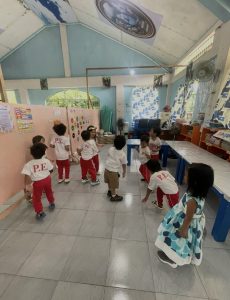
This is what learning looks like in many last-mile schools.

In Quezon Province, students at Siain Elementary School have been studying in spaces that are not suitable for learning. Their school is composed of makeshift classrooms made of woven bamboo, built using funds raised by the students’ parents.

Through the generosity of our partners and donors, Angat Buhay was able to build two new classrooms for the school using the Silid-Pangarap design developed by the AGAPP Foundation. These new classrooms are fully equipped with proper facilities, learning materials, and school supplies to support the students’ learning.

For many, this may be just a new classroom. But for the students of Siain Elementary School, it is a safe space to learn, a source of dignity, and a renewed chance to dream bigger for their future.

This was made possible through the generosity of GMA Network, Family Feud Philippines, Myriad USA, and VXI.

🎒Help us reach more last-mile schools: donate.angatbuhay.ph/bayanihan
Angat Buhay

Recent Stories:

Angat Buhay is a non-government organization accredited by the Philippine Council for NGO Certification (PCNC) and certified with ISO 9001:2015 – Quality management systems, ensuring its commitment to transparency, accountability, and operational excellence.

Contact us at: info@angatbuhay.ph

Copyright 2024. Angat Pinas Inc. All rights reserved. | Powered by Pixelzero Digital Solutions

This will close in 0 seconds

This will close in 0 seconds

This will close in 0 seconds

ANGAT KALIKASAN TOOLKIT 2024 [Download]

This toolkit summarizes the principles and best practices discussed in Angat Kalikasan. These strategies support SKs in their role of enhancing community-level environmental governance through problem-solving approaches, stakeholder management, policy creation, advocacy campaigning, and monitoring. The toolkit includes activities and templates you can use to further develop and refine your environmental initiatives.